Record-keeping
How to keep a bleeding and cycle diary for an appointment
What to record about your periods so that you can describe them with dates and counts rather than from memory. A practical guide, with a printable tracker.
By FerroLady · Updated · 4 min read
Describing your periods from memory is hard. How heavy they were and how long they lasted tends to blur from one cycle to the next. A diary replaces a general impression with dates and counts, which is what most people find easier to talk about.
What to record
- The first and last day of each period.
- Each day, how heavy it was in your own terms. Light, medium and heavy are enough as long as you use them the same way each time.
- How many pads, tampons or cups you used each day, if you want a number.
- Whether you needed to change protection during the night.
- Pain, and anything you had to cancel or work around because of the period.
- Anything else you want to mention that does not fit the list.
Keep your own scale consistent
Nobody else needs to share your definition of heavy. What helps is that you apply it consistently, so that a heavy day in March means the same as a heavy day in June. If you also write down how many products you used, you have a second record that does not depend on a word.
Include the days between
Spotting or bleeding between periods is worth recording with the date, even if it seems minor. The length of the gap between the start of one period and the start of the next is simply the number of days between those two dates, and a diary lets you count it.
Bring it with you
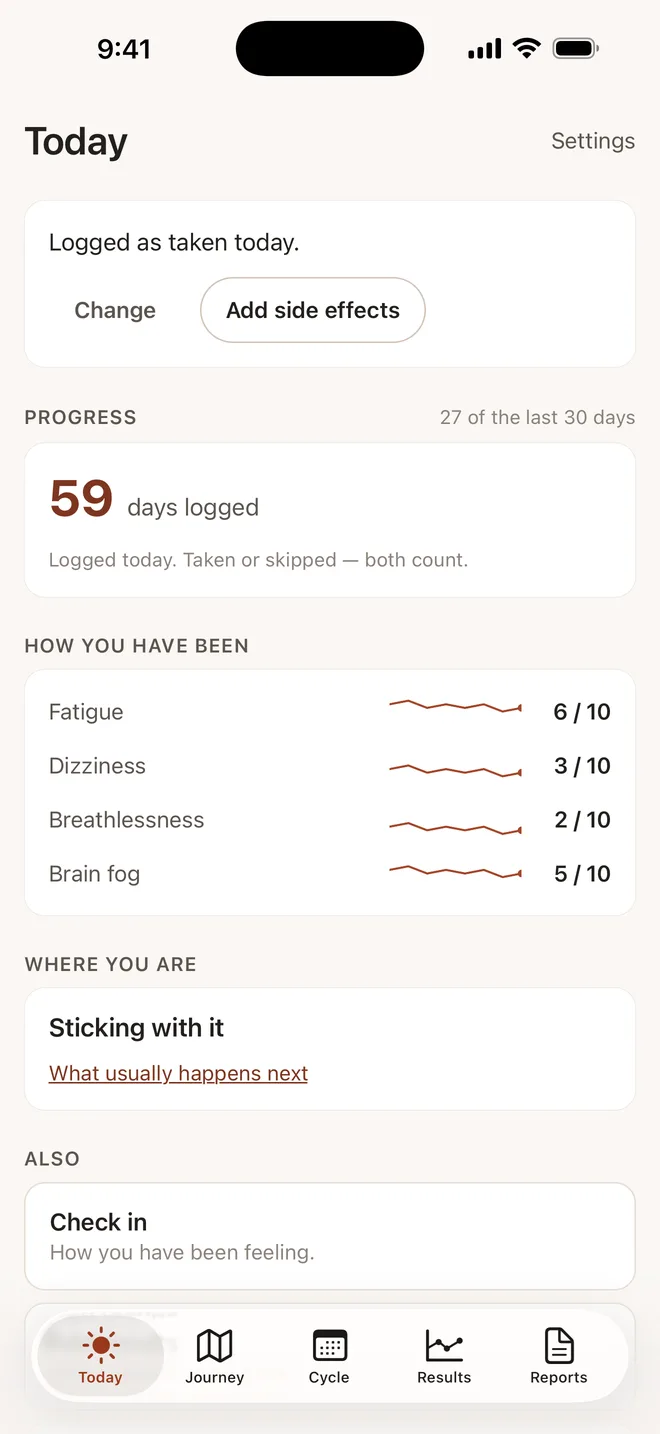
A few months of dates and counts is easier to talk through than a description. Paper works, and the four-week tracker on the downloads page has a column for it. FerroLady records it on your phone and totals periods, days of bleeding and heavy days into your one-page summary.