Education
Iron deficiency symptoms: what the NHS lists
The symptoms the NHS lists for iron deficiency anaemia, including the less common ones, and why a dated symptom diary is useful to bring to an appointment.
By FerroLady · Updated · 3 min read
Symptoms do not tell anyone whether iron is the cause. Many of them are common and have many explanations, which is why a blood test is how iron deficiency is checked. This page lists what the NHS says people with iron deficiency anaemia may notice.
The more common symptoms
- Tiredness and lack of energy.
- Shortness of breath.
- Noticeable heartbeats (palpitations).
- Paler skin than usual.
- Headaches.
Less common symptoms
The NHS also lists ringing in the ears (tinnitus), an unusual taste in the mouth, itching, a sore tongue, hair loss, cravings for things that are not food (called pica), difficulty swallowing, mouth ulcers, changes to the nails and restless legs.
Many people notice nothing
MedlinePlus points out that low iron often causes no symptoms until it is very low. A lack of symptoms does not say anything about iron stores either way.
Keeping a record of what you notice
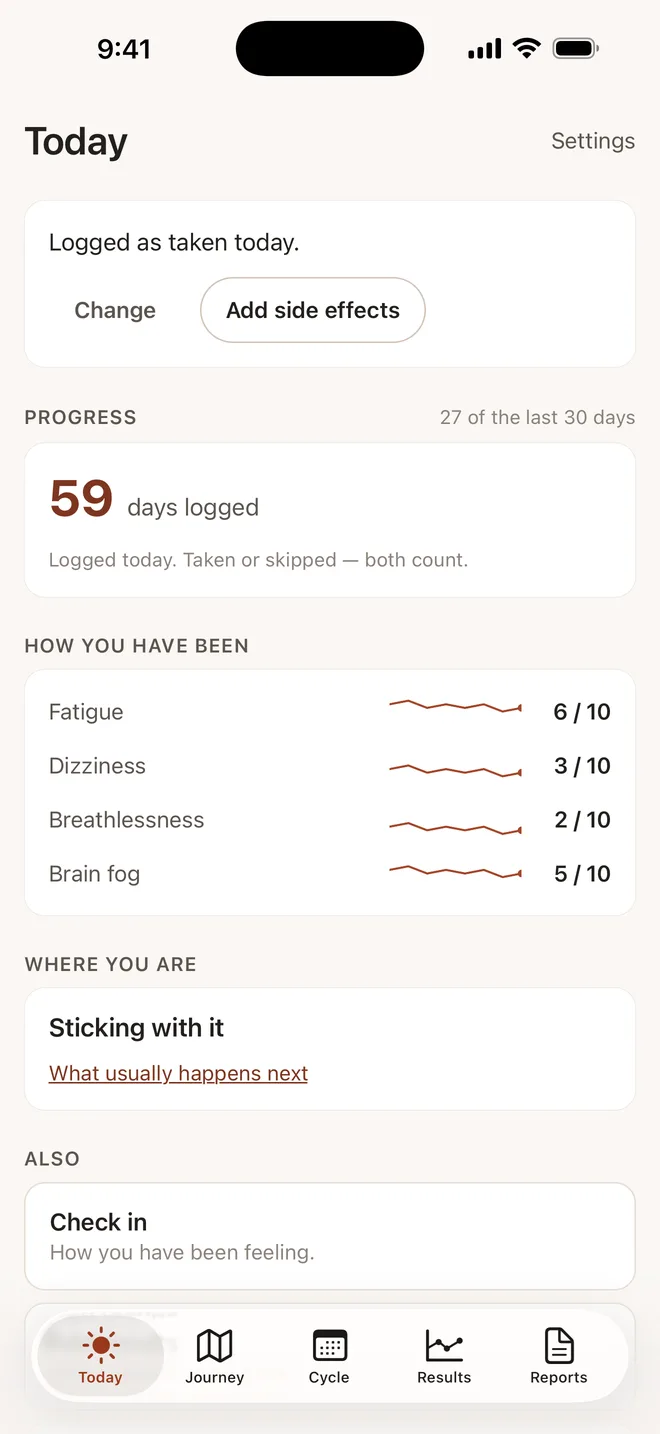
Because symptoms come and go, they are hard to describe from memory. A short note with the date, in your own words, gives a doctor something specific to work with. FerroLady records symptom check-ins with their dates, and the free printable tracker at ferrolady.com/downloads has a column for it.
Sources
Written by FerroLady from these public pages. We paraphrase them; check the original for the current wording.